Project Overview
Objective: Design exhibit materials that enhance how guests and associates engage with fine art collection at The Coca-Cola Company’s headquarters by creating clear, cohesive, and visually compelling experiences across 4 buildings. The exhibits are refreshed on a 3–4 month cycle to maintain engagement and introduce new artistic narratives.
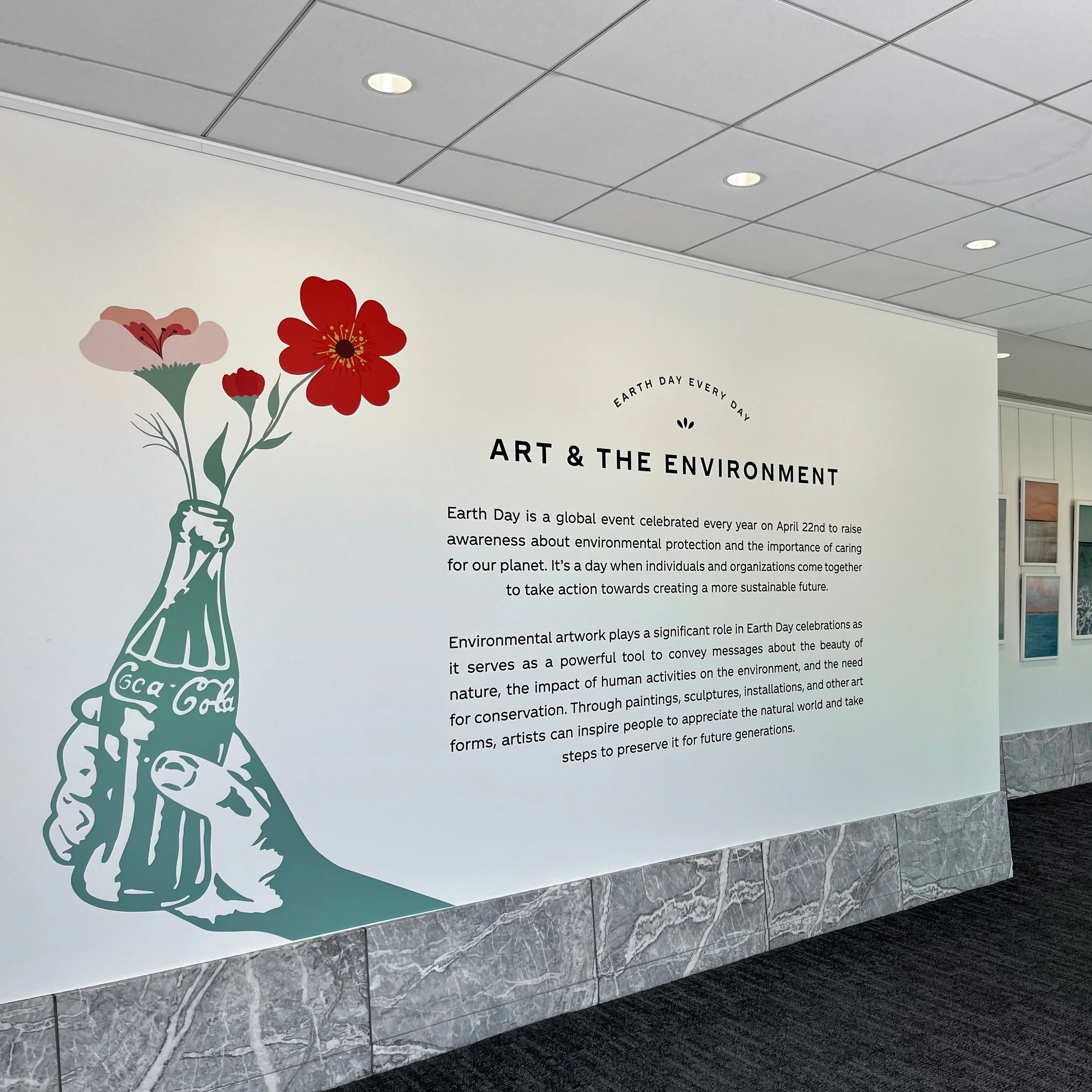
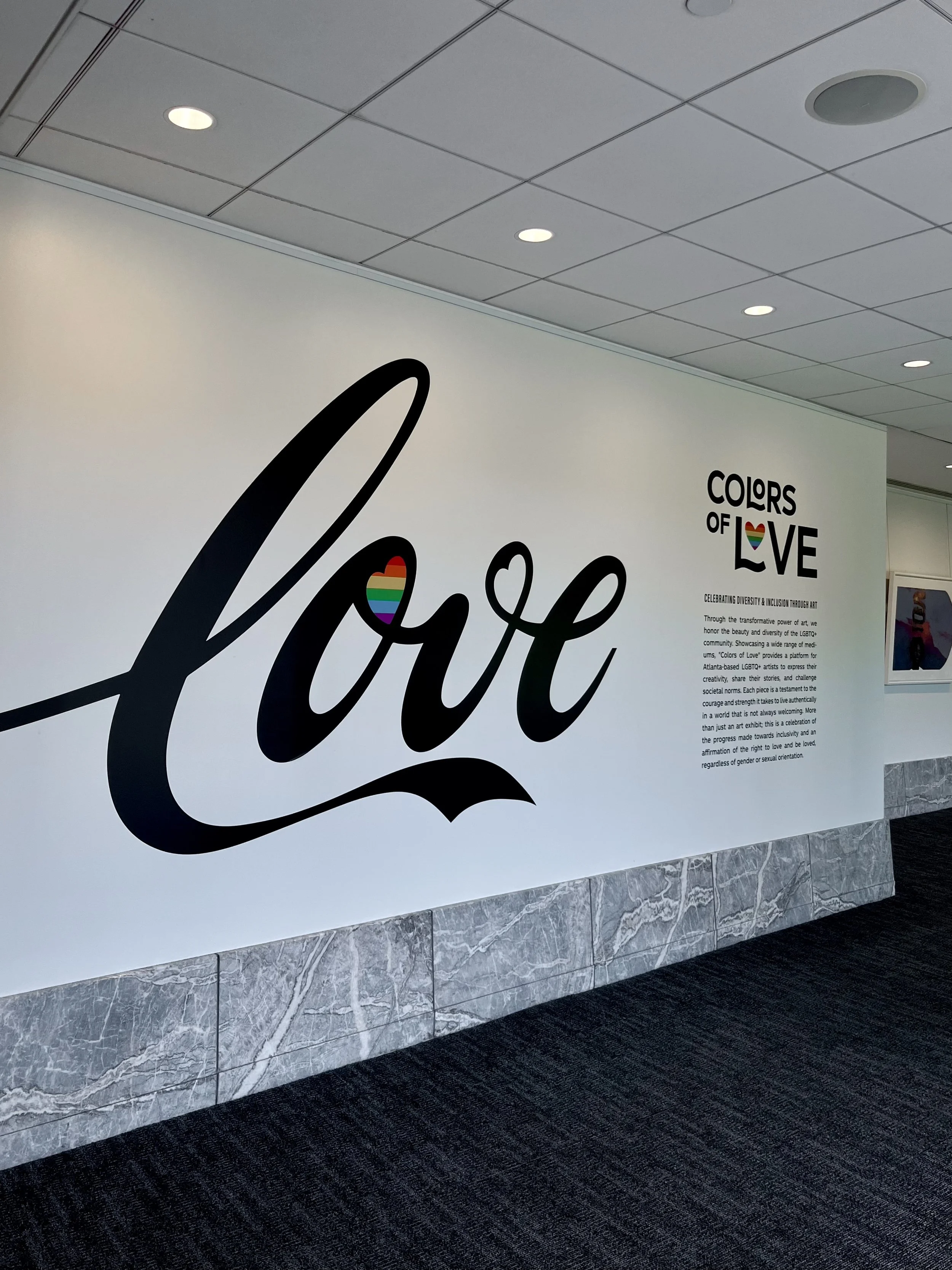
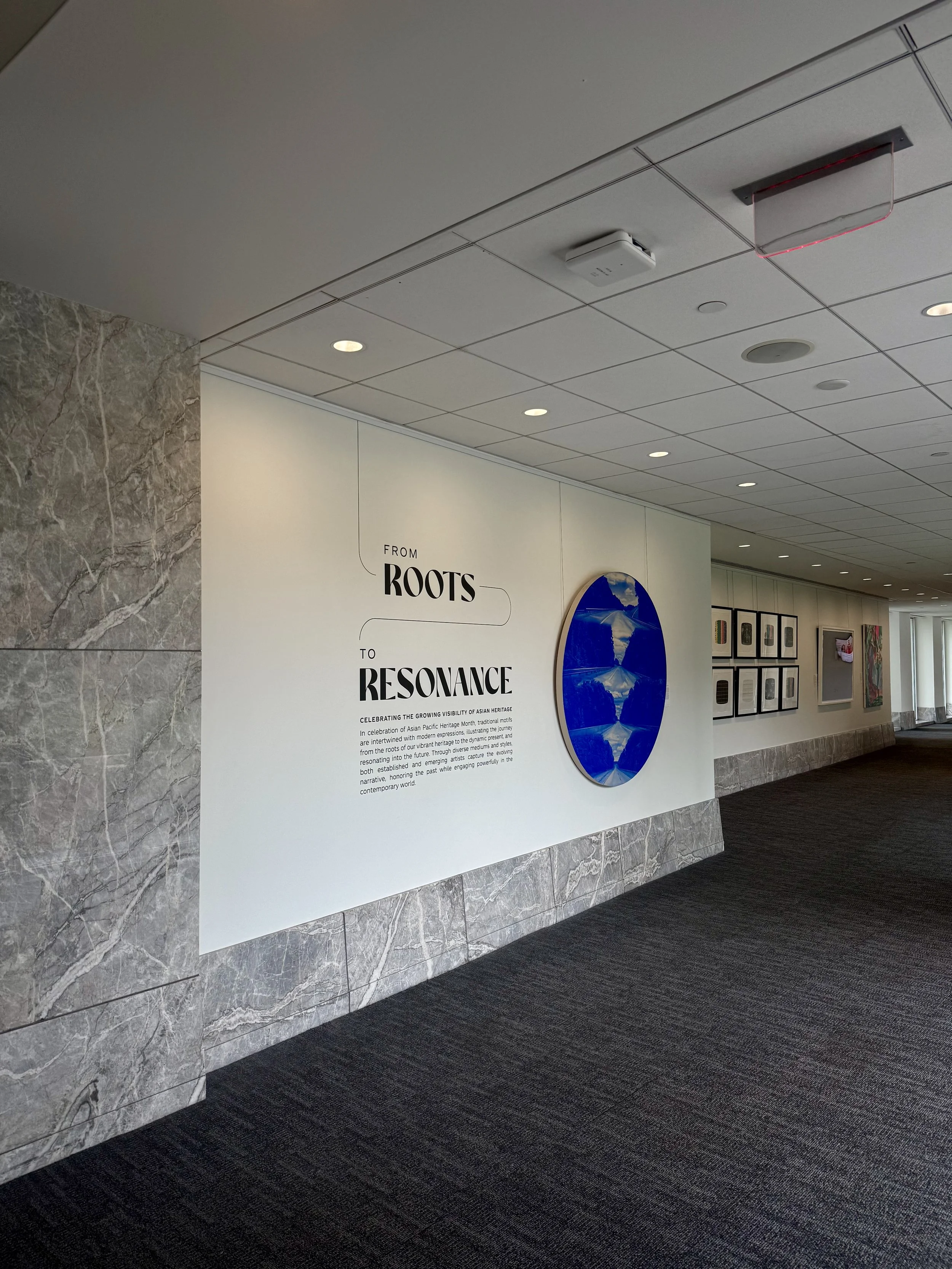
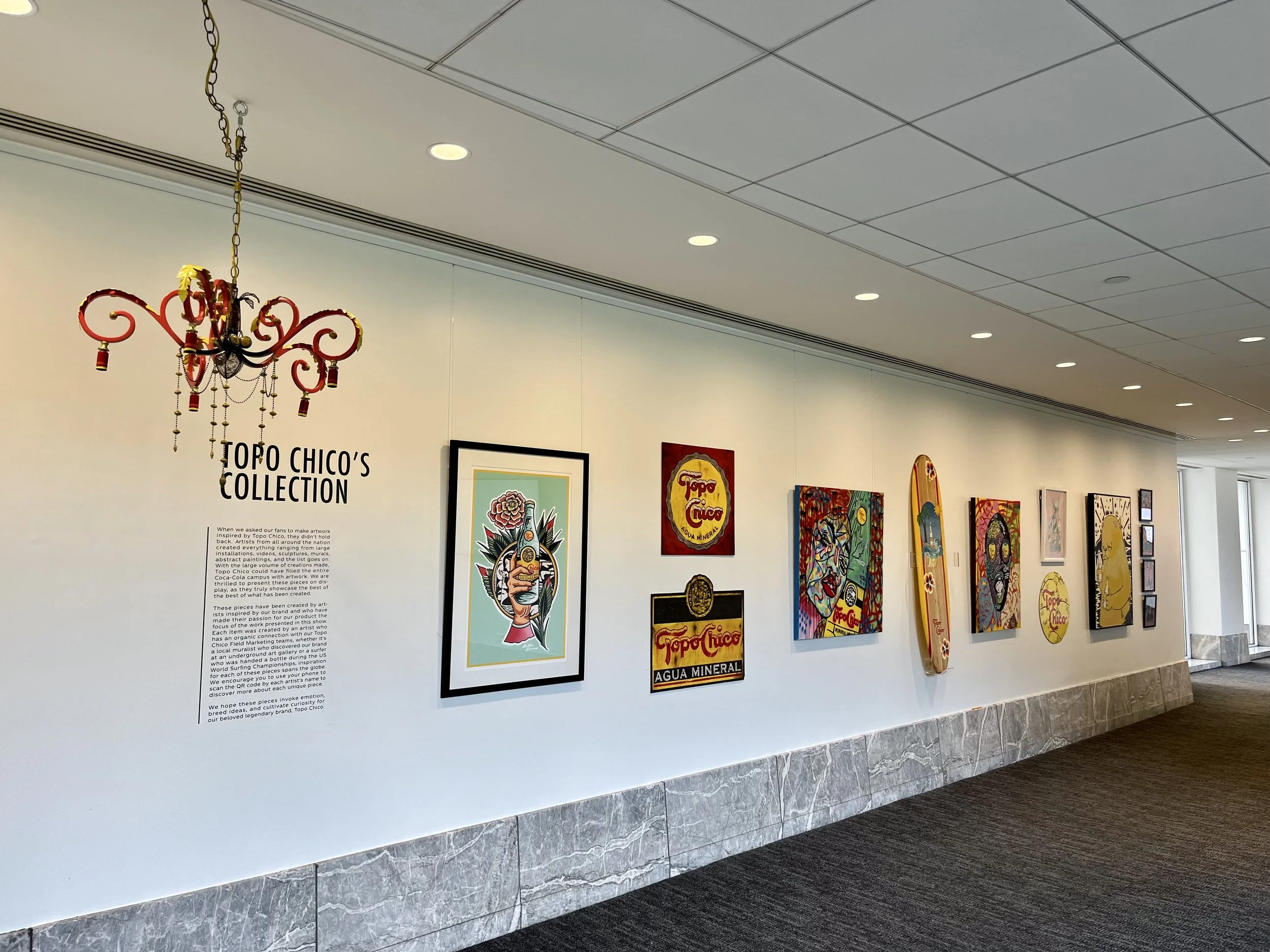
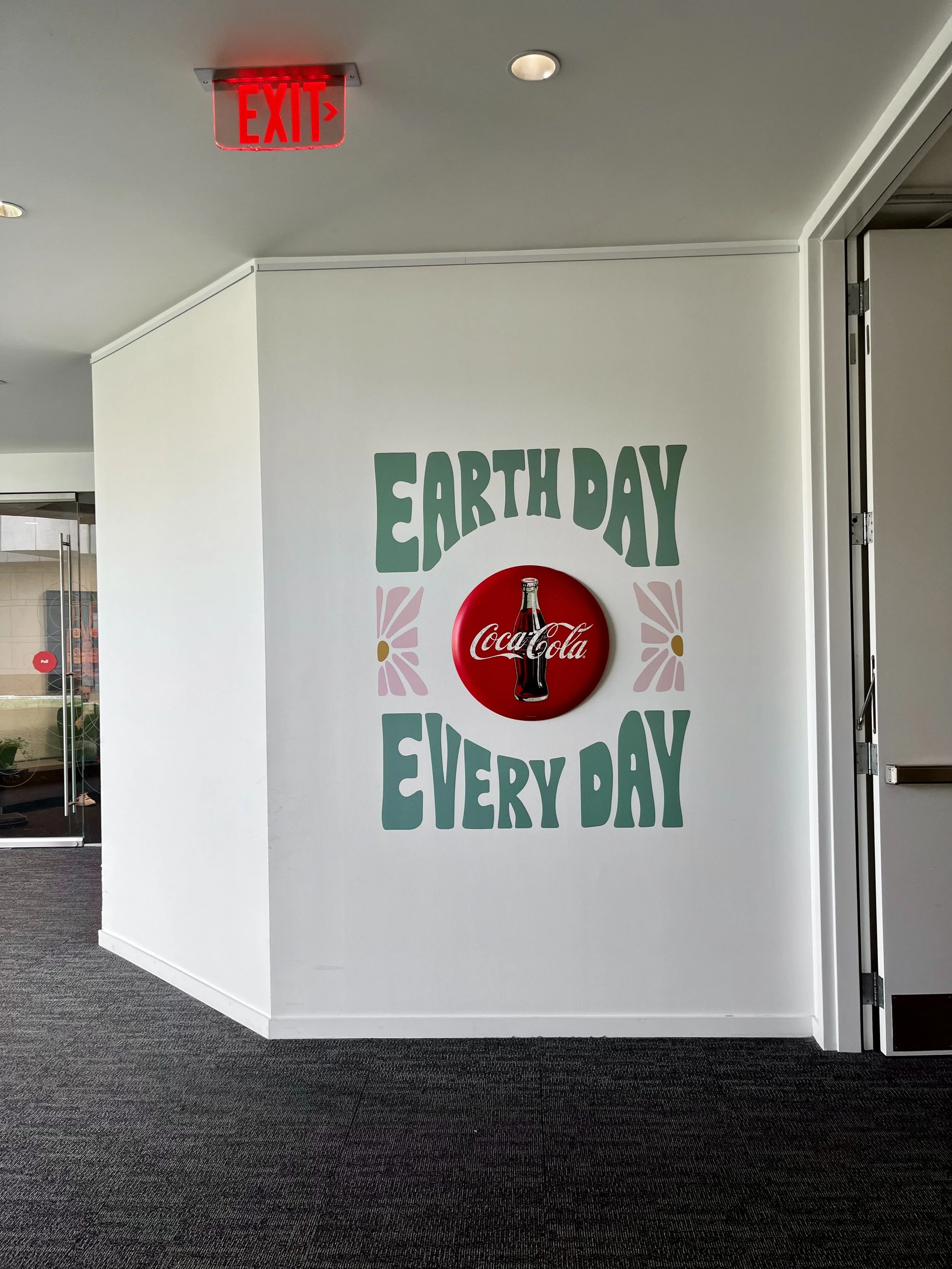
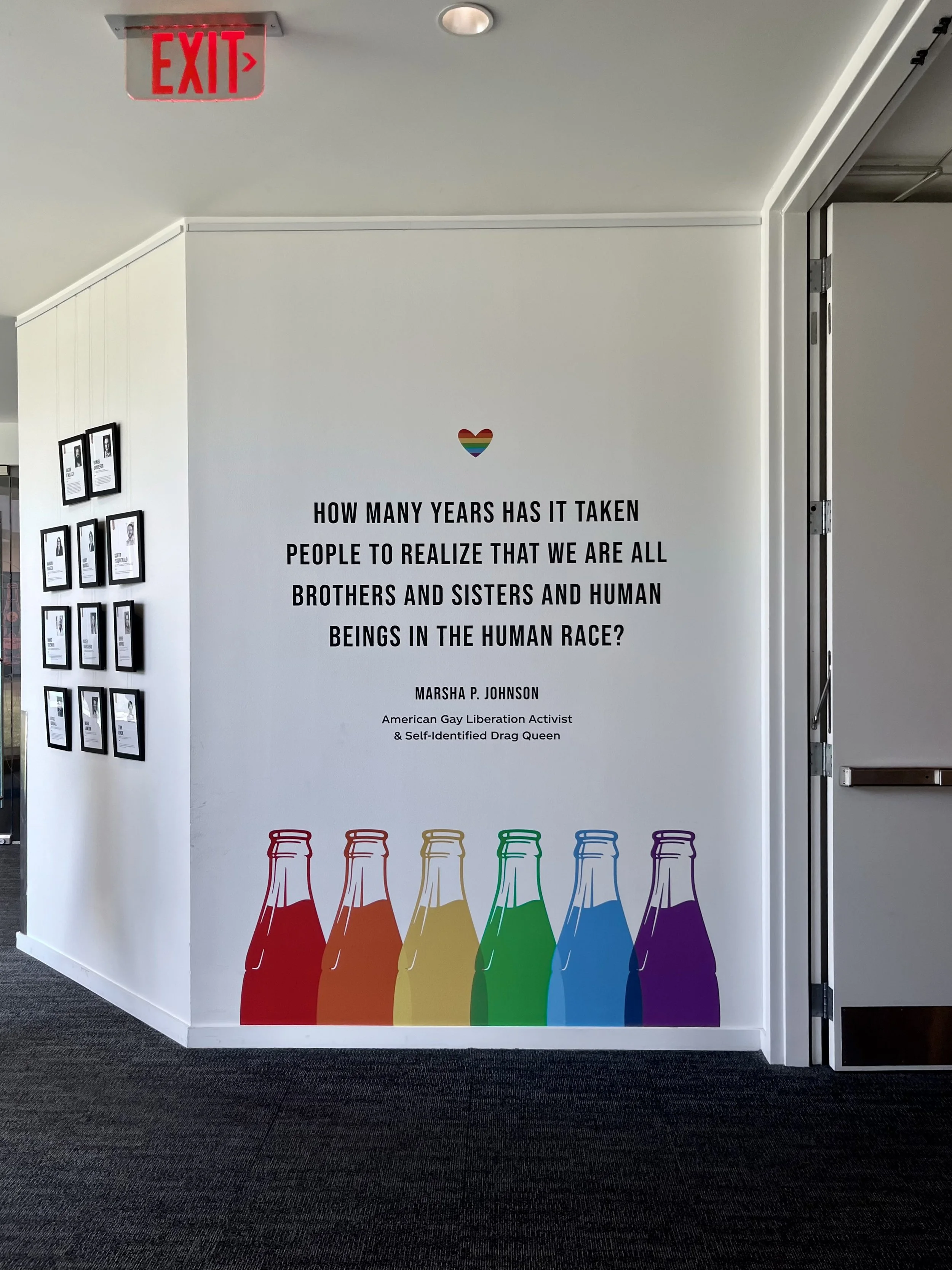
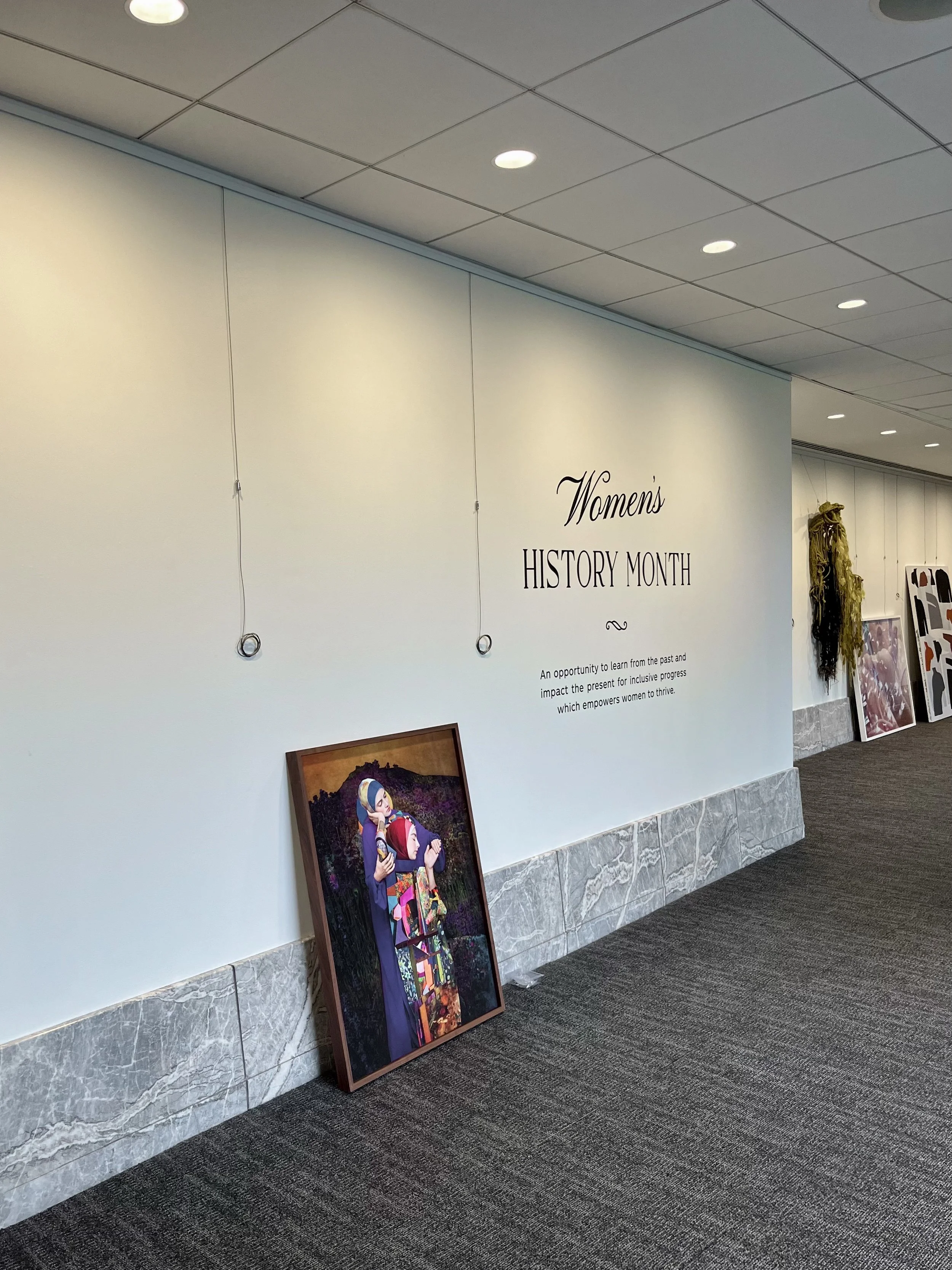
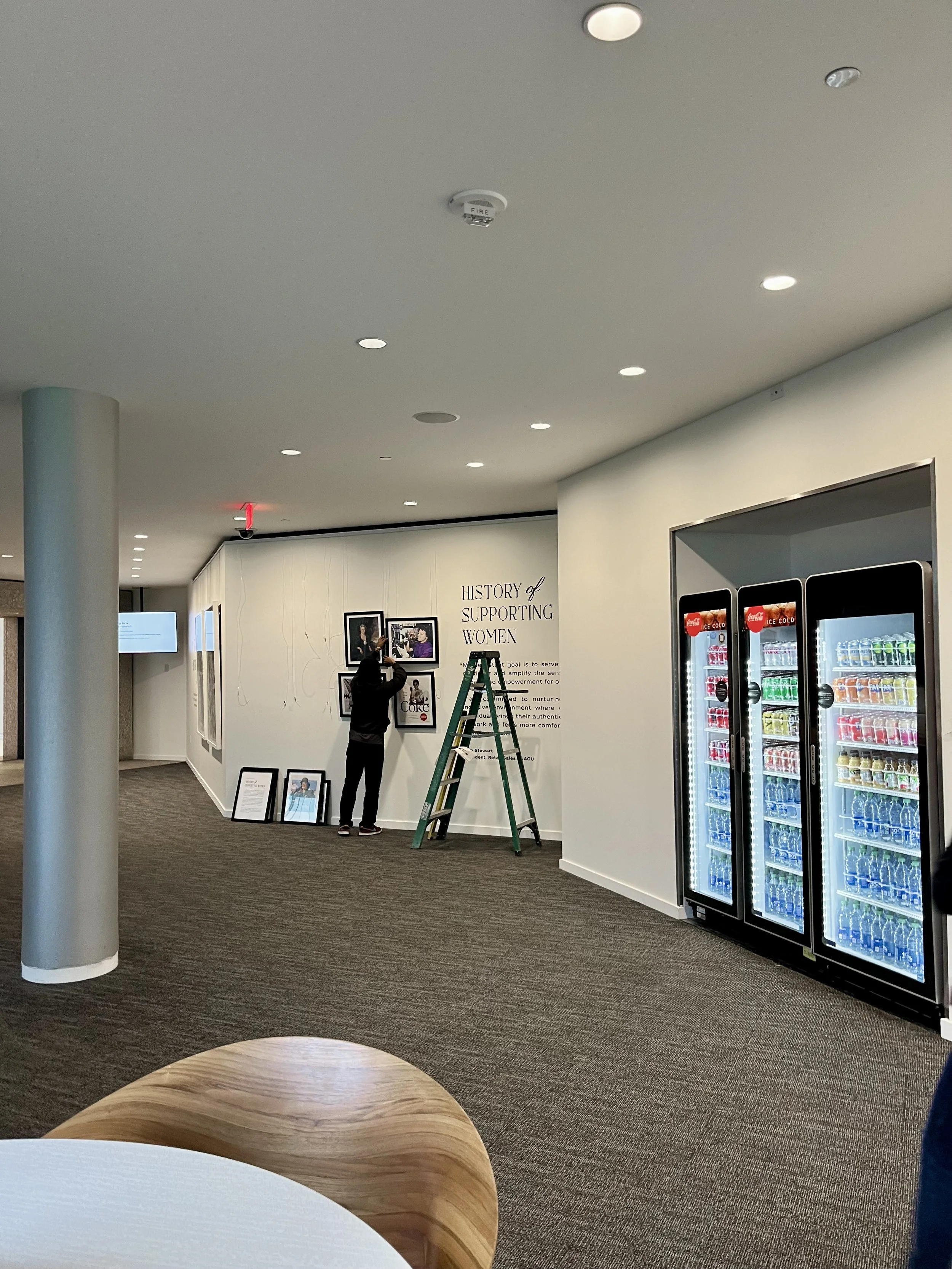
Approach: Supported the design and production of rotating fine art exhibits by collaborating with both the Fine Arts Manager and the relevant inclusion network / group to ideate the overall look & feel of each exhibit based on narrative themes and stakeholder input. Developed visual systems that translated curatorial intent into clear spatial frameworks through typography, layout, and hierarchy, guiding visitor experience across four buildings at the AOC. Extended these systems across environmental applications such as vinyl, labels, and spatial graphics, partnering with fabrication and installation teams to ensure accurate execution and consistency across all spaces.
-
Fine Arts Program, The Coca-Cola Company; cross-functional partners including brand teams and inclusion networks
-
Year: 2022 – 2025
Duration: Rotating exhibits (3–4 month cycles)
-
Background: The Coca-Cola Company maintains a fine art collection of over 2,000 works, established in 1986 to celebrate its centennial. Featuring artists such as Auguste Rodin and Andy Warhol, the collection spans a range of movements and mediums and is integrated throughout the headquarters as a permanent, rotating installation.
Audience & Purpose: Designed for TCCC associates and guests across the Atlanta Office Campus (AOC), exhibits enhance engagement with the collection through clear, accessible, and visually cohesive experiences.
Constraints: Tight, recurring exhibit cycles required efficient design execution while balancing brand guidelines, curatorial vision, and diverse stakeholder input.
Spatial Considerations: Designed for consistency across a four-building campus, accounting for sightlines, viewing distance, and visitor flow to ensure legibility, intuitive navigation, and cohesive alignment of exhibit elements.
-
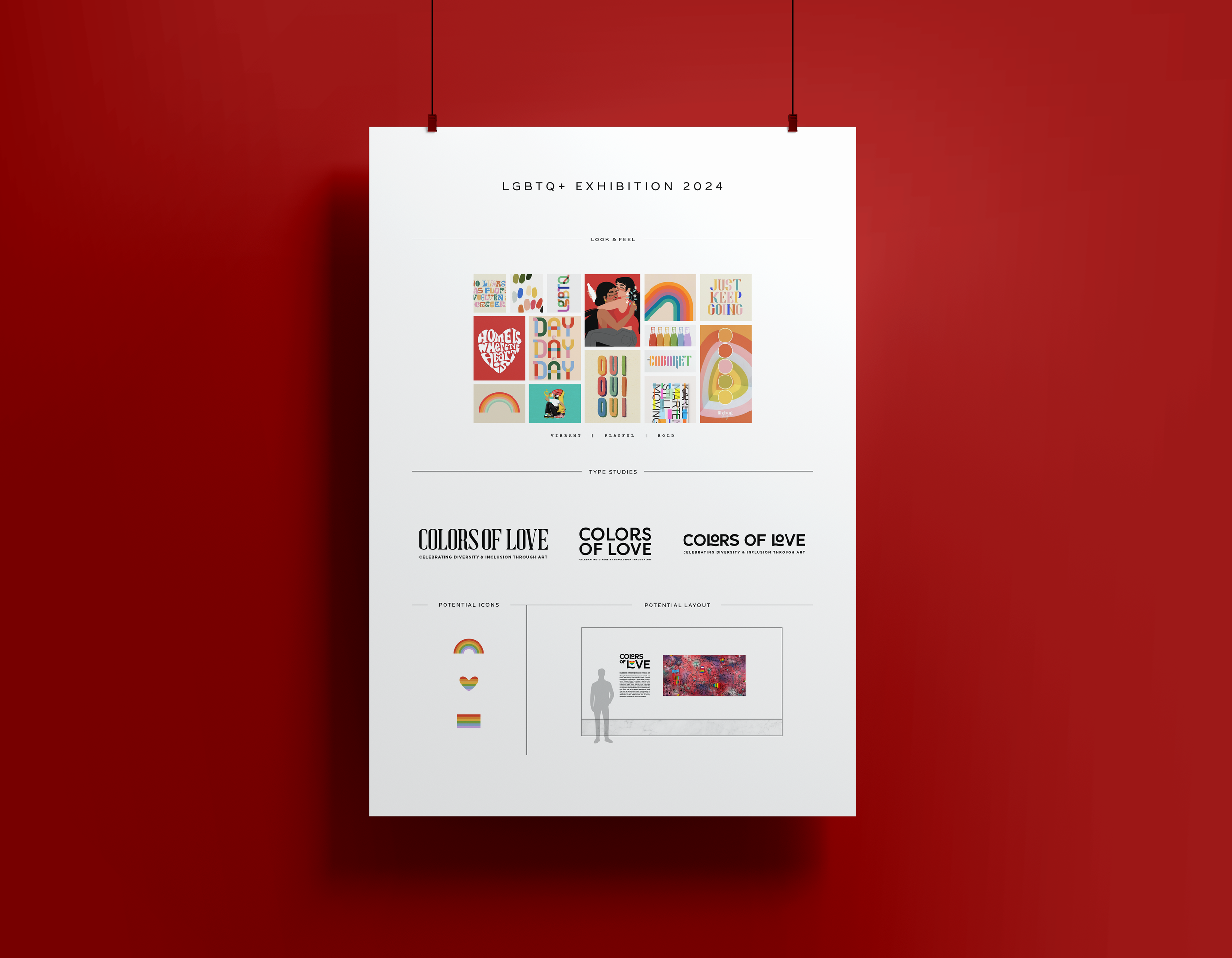
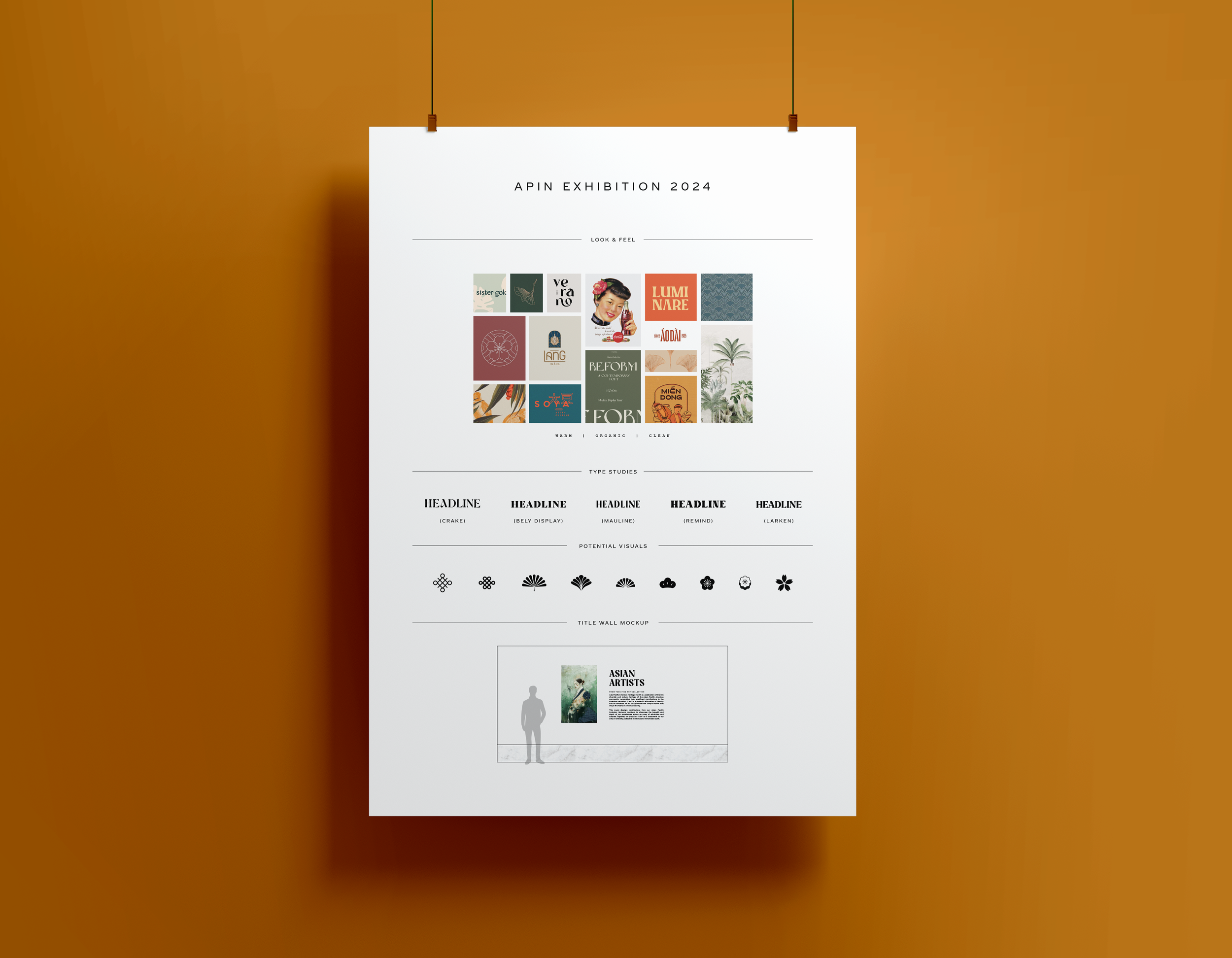
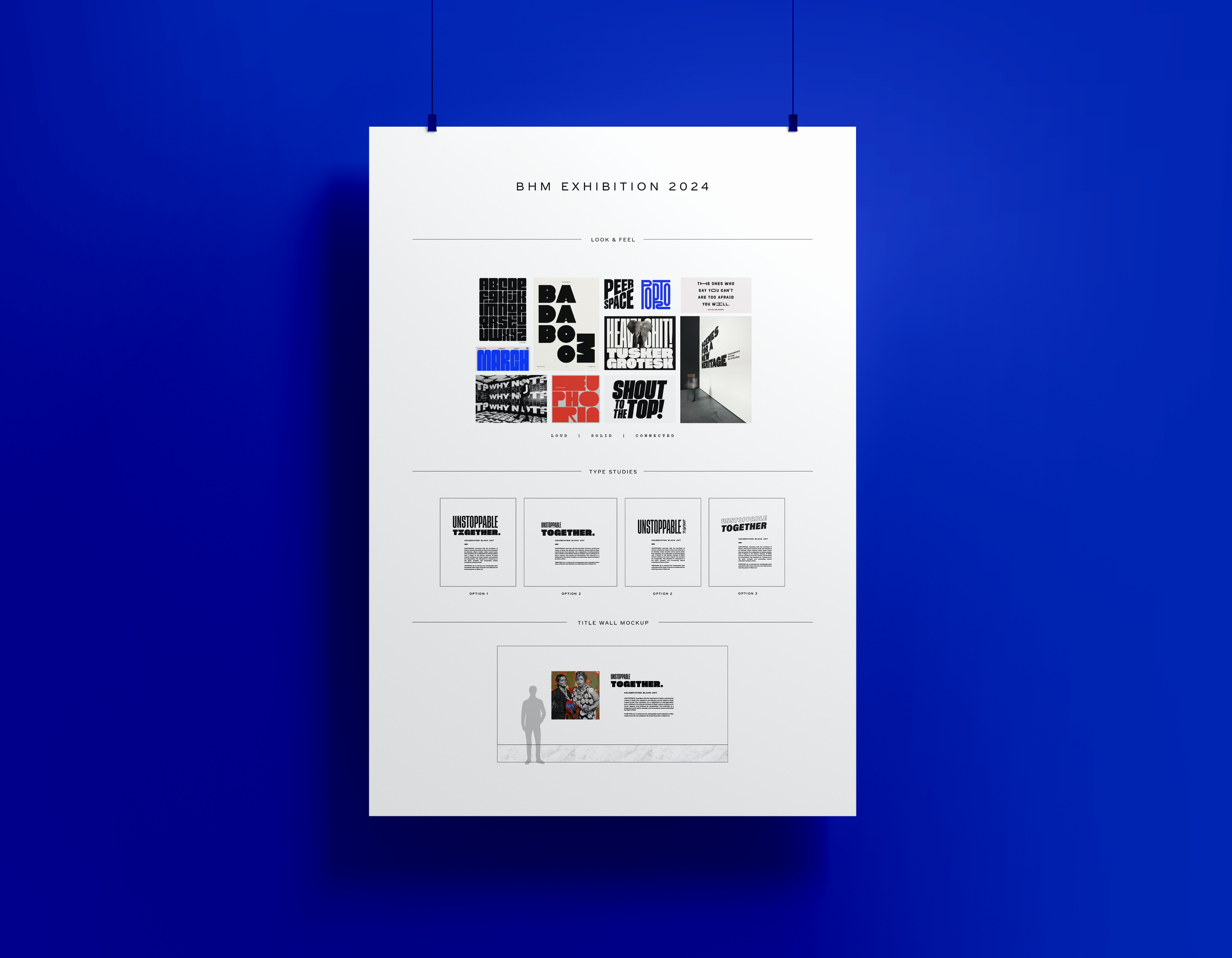
Exhibit Ideation: Began each exhibit by developing moodboards tailored to the featured group or inclusion network (e.g., Asia Pacific Inclusion Network, Black Employee Network), establishing an initial visual direction aligned with the exhibit narrative.
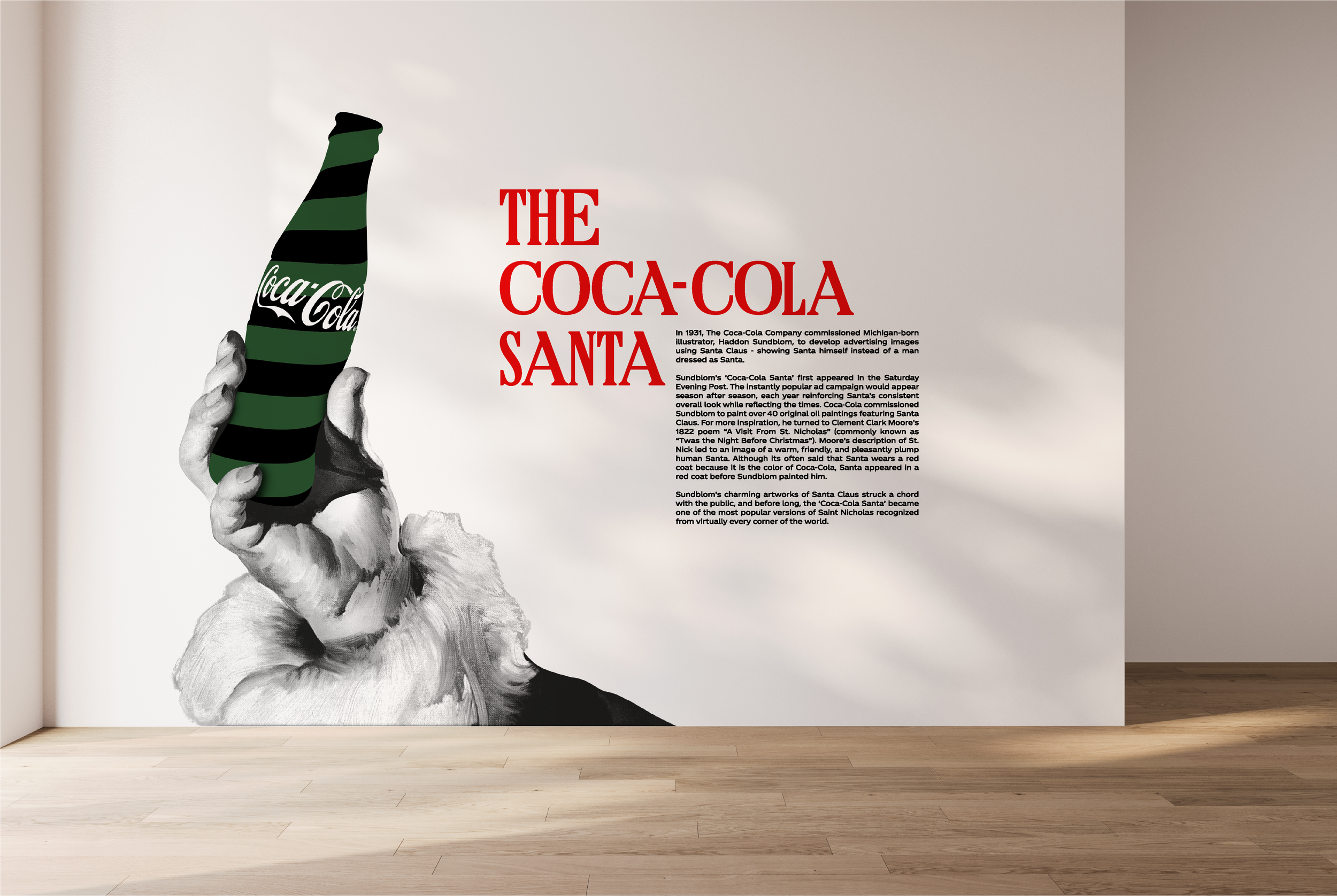
Visual System Development: Translated each direction into a cohesive design system defining typography, title lockups, graphic elements, layout, and color to support the exhibit narrative and guide clear communication while allowing the artwork to remain the primary focus.
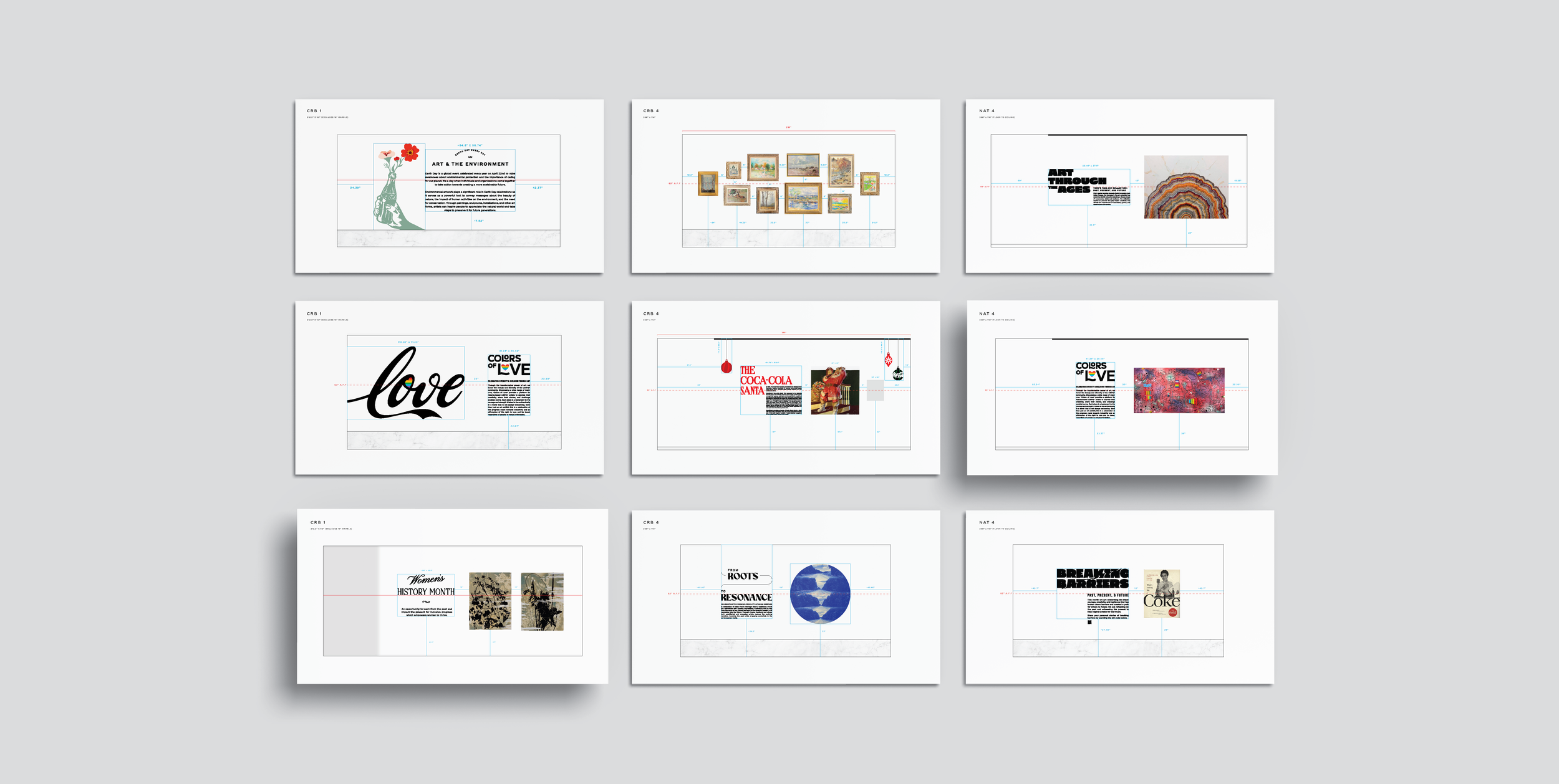
Content & Spatial Design: Applied the system across exhibit materials including vinyl, labels, and environmental graphics, ensuring clear hierarchy and consistency across varied spatial conditions.
Production & Installation: Prepared fabrication-ready files and partnered with fabricators and installers to ensure accuracy in material, scale, and placement, maintaining design integrity through final execution.
-
This work deepened my appreciation for how art can shape everyday environments – transforming the workplace into a space for inspiration, storytelling, and cultural connection.
It also strengthened my ability to design within tight, recurring timelines, as exhibits rotated every few months. Working within this cadence required consistency, adaptability, and attention to detail – balancing efficiency with a high standard of execution.
Overall, this experience reinforced my ability to design within established systems while contributing to experiential environments, where clarity, restraint, and context are as critical as visual expression.